
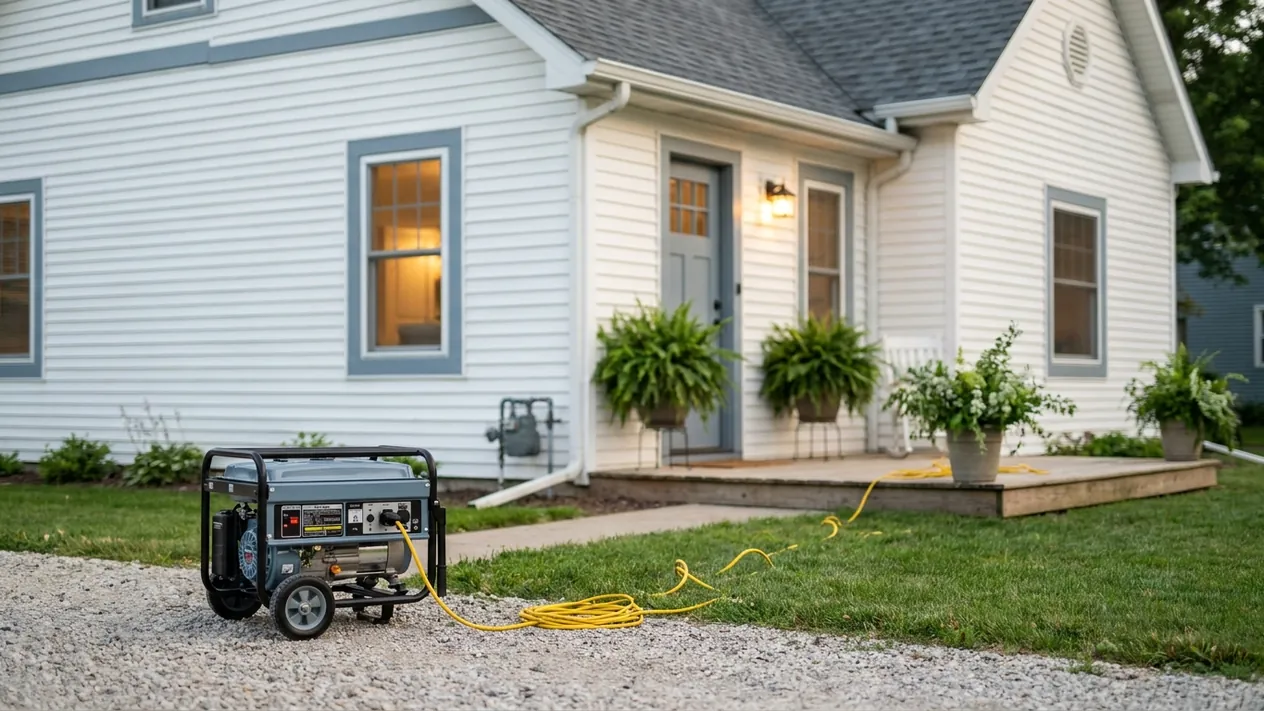
A portable generator can power selected equipment during a Kentuckiana outage, but its exhaust and electrical connections can create new emergencies. Decide where the generator will sit, which devices it will power, and how people will recognize trouble before the lights go out. If you cannot place it safely outside, do not run it. Make another power plan for essential needs.
The most important rule is carbon monoxide safety. The CDC says never to run a generator inside a home, basement, or garage, or within 20 feet of a window, door, or vent. An open garage door does not make indoor operation safe. Carbon monoxide cannot be seen or smelled, so people may become ill before they know exhaust has entered the building.
Before an outage: choose a truly outdoor location
Walk the property in daylight and identify a level outdoor location at least 20 feet from doors, windows, and vents, with exhaust directed away from openings. Check nearby homes too; a placement that keeps fumes from your own windows should not send them toward a neighbor's open window. The spot also needs to be dry and clear of floodwater. Never place a running generator in a garage, carport that is too close to the home, basement, crawlspace, shed, or enclosed porch.
Plan an outdoor-rated cord route long enough to maintain that distance. Do not move the generator closer to reach an appliance when an outage happens. Follow the generator manual for clearance and weather protection. CDC winter-storm guidance says not to use a generator or appliances when wet; a weather cover must be intended for a running generator and must not enclose its exhaust. If you cannot keep the machine dry while leaving it outside and ventilated, wait for safer conditions.
Check that battery-powered or battery-backup carbon monoxide alarms work before you need the generator. Our smoke and CO alarm guide explains routine testing and replacement. A CO alarm is a warning layer, not permission to run a generator closer to the home. Place and maintain alarms according to their instructions.
Power only the equipment your setup can handle
List the appliances or medical devices you need during an outage. Read each device's power label and the generator's continuous and starting output ratings; a motor can require extra power when it starts. The owner's manual should describe suitable loads and cords. If the numbers or plug types are unclear, ask the generator manufacturer or a qualified electrician. Overloading or improvising a connection can damage equipment and create an electrical hazard.
For a portable setup, the CDC advises connecting appliances with individual heavy-duty, outdoor-rated extension cords. Inspect each cord for damage, use one with a suitable rating and plug, and follow the generator instructions. Keep cords away from standing water and routes where doors, vehicles, or foot traffic can damage them. Do not use an ordinary indoor power strip as a substitute for a properly rated outdoor connection.
Never plug a generator into a wall outlet to “feed” the house. The current can travel backward onto utility lines and endanger repair workers and neighbors. The CPSC warns against this backfeeding practice. If you want to power household circuits, arrange a properly designed transfer setup with a qualified electrician before the outage. Our electrical-panel guide explains the panel's role; a homeowner should not improvise a panel connection during an emergency. Browse local electrical listings if you need a professional assessment of a planned backup-power installation.
When the power fails: take five safety steps
- Check the scene. Stay away from downed lines, standing water, and damaged electrical equipment. Do not set up the generator in a flooded area.
- Place it outside. Keep the machine at least 20 feet from every door, window, and vent, with exhaust facing away, as the CDC advises.
- Confirm alarms. Have working battery-powered or battery-backup CO alarms inside. Make sure everyone knows to leave the building if an alarm sounds.
- Connect only planned loads. Follow the generator manual and use suitable outdoor-rated cords or a professionally installed transfer setup.
- Monitor safely. Keep children and pets away from the machine, protect it from wet conditions without enclosing it, and turn it off when it cannot be supervised according to its manual.
If anyone develops headache, dizziness, weakness, nausea, chest pain, or confusion while a generator is running, get everyone to fresh air immediately and call 911. Do not search the house for the source first or wait to see whether symptoms pass. The CDC lists these as possible carbon monoxide symptoms; an alarm should prompt the same immediate exit and emergency call.
Fuel and shutdown deserve their own plan
Use only the fuel specified in the generator manual, in approved containers, and store it as the manual and local fire guidance direct. Do not keep gasoline in living spaces. Turn the generator off and let it cool before refueling; spilled fuel can ignite on a hot engine. The FEMA portable-generator flyer warns against fueling a running generator and against operating it in wet conditions. Keep a light available so you can see the controls and fuel container without using a candle near fuel.
When utility power returns, follow the generator and transfer-equipment instructions for disconnecting loads and shutting down. Do not handle plugs or switches while standing in water. If a cord, outlet, panel, or appliance became wet or hot, leave it disconnected and ask a qualified electrician to inspect it before use. If the generator behaved unexpectedly, record the symptom and have it serviced instead of assuming the next outage will be different.
Plan for people who depend on power
A generator is only one part of an outage plan. If someone relies on electrically powered medical equipment, talk with the equipment provider and care team about battery duration, charging options, and what to do when power cannot be restored in time. Keep contact numbers and a place to relocate if needed. The CDC's power-source checklist includes backup batteries, chargers, lighting, alarms, and other supplies to consider before an emergency.
Keep flashlights, a weather radio or charged phone, and a way to receive utility updates. During a long outage, food storage and indoor temperature can become separate health concerns. The CDC outage guide covers those decisions. Our seasonal home checklist can help you add alarm tests and an outage-supply review to normal home maintenance.
When to call an electrician
Call a qualified electrician before installing a transfer switch or inlet, before tying a generator to home circuits, or if you need to determine which household loads a backup system can safely support. Also seek an inspection for water-damaged electrical equipment or a panel that shows heat, damage, or abnormal behavior. Ask for a written scope, the equipment to be installed, and instructions you can use during an actual outage. Our contractor-selection guide helps compare proposals, and the Electrical directory can help you find businesses to contact.
The safest outage setup is one you can execute without moving the generator closer to the house, improvising a cord, or deciding how to connect it in the dark. Put the location, cord ratings, loads, CO-alarm plan, and shutdown steps with the generator manual. Review the plan before storm season and after any change to the home's electrical system.
Sources: CDC power-outage safety, CPSC generator and CO safety, CDC winter-storm generator guidance, and FEMA portable-generator guidance.