
A backed-up sewer line is one of the most stressful plumbing problems a homeowner can face. Raw sewage backing up into your basement or lowest drain is not just unpleasant. It can cause thousands of dollars in water damage. The good news is that many main line clogs can be cleared yourself if you know how to snake your sewer cleanout properly. In this guide, we'll walk you through finding your cleanout, recognizing the warning signs of a main line clog, choosing the right snake, and clearing the blockage step by step.
What Is a Sewer Cleanout?
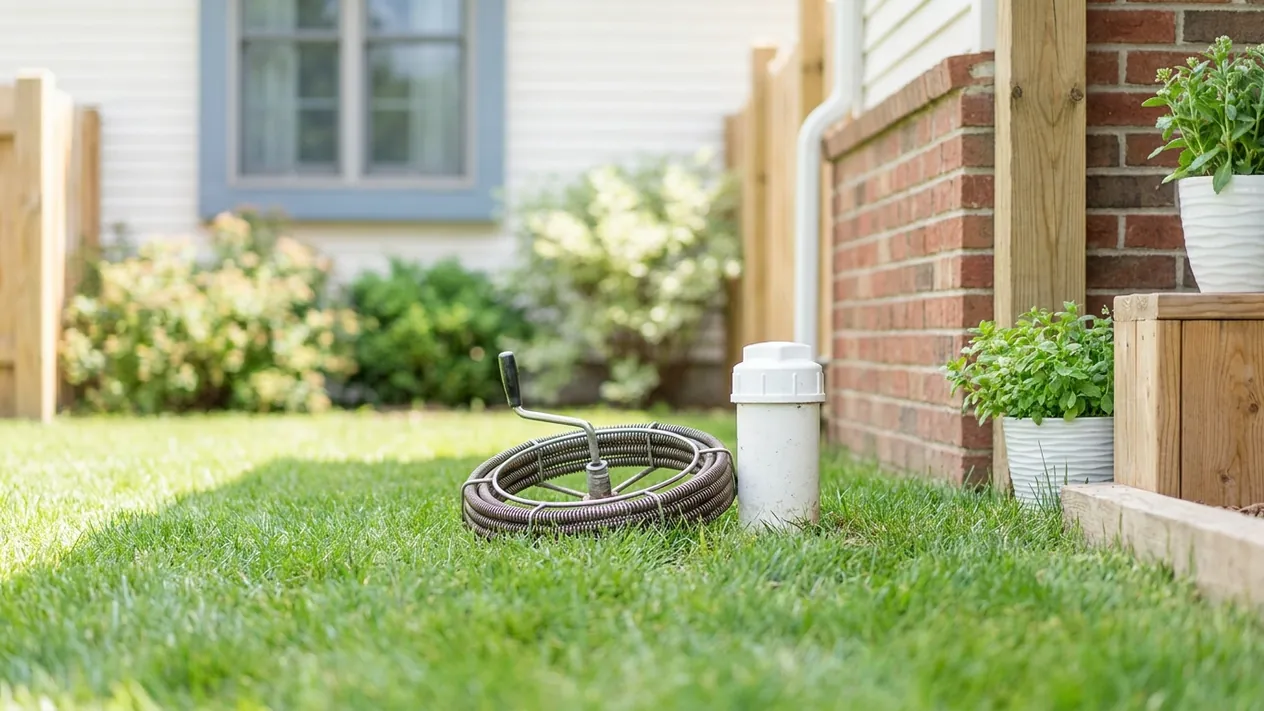
Your sewer cleanout is a capped pipe (usually 3 to 4 inches in diameter) that provides direct access to your main sewer line. It's the point where you (or a plumber) can insert a drain snake or auger to clear blockages between your house and the municipal sewer or septic tank. Most homes built after the 1970s have at least one cleanout, and many have two: one inside (often in the basement or utility room) and one outside near the foundation.
How to Find Your Sewer Cleanout
Before you can snake anything, you need to locate the cleanout. Here's where to look:
- Outside: Walk the perimeter of your home, focusing on the side that faces the street (or septic tank). Look for a white or black PVC cap, or a brass/cast iron cap, sticking up slightly from the ground. It may be hidden by landscaping or buried just below soil level.
- Basement or crawl space: Follow the largest drain pipe in your basement. The cleanout is usually a Y-fitting or T-fitting with a threaded cap, often near where the main line exits the foundation wall.
- Utility room: In slab-on-grade homes, the cleanout may be in a utility closet, garage, or near the water heater.
Signs You Have a Main Line Clog
Not every slow drain means your main line is blocked. Here's how to tell the difference:
| Symptom | Branch Clog | Main Line Clog |
|---|---|---|
| Slow drain | One fixture only | Multiple fixtures |
| Gurgling sounds | At that fixture | From other drains when you flush |
| Sewage backup | Rare | Through lowest drain (basement floor drain, first-floor tub) |
| Toilet behavior | Just that toilet | Flushing one toilet backs up another |
If multiple fixtures are affected simultaneously, or if flushing a toilet causes water to bubble up in a basement drain, you almost certainly have a main line issue, and the cleanout is where you'll address it.
Tools You'll Need to Snake a Sewer Cleanout
Gather your gear before you open that cap. You don't want to be running to the hardware store with a sewer line gushing. If you haven't already, check out our essential home toolkit guide for a complete list of must-have tools.
- Pipe wrench or large adjustable wrench: to remove the cleanout cap
- Drain snake (hand auger): a 25- to 50-foot manual snake for moderate clogs
- Power auger (for stubborn clogs): rent a 75- to 100-foot power auger from your local hardware store for serious blockages
- Rubber gloves (heavy-duty): this is a sewer line, not a kitchen sink
- Safety glasses
- Bucket: to catch water and debris when you open the cap
- Garden hose: to flush the line after clearing
- Old towels and plastic sheeting: to protect the area
Hand Snake vs. Power Auger: Which Do You Need?
A hand snake (also called a manual drum auger) is a coiled cable you feed into the pipe by hand while cranking a handle. It's effective for soft blockages like paper buildup, grease, or light debris within 25 to 50 feet of the cleanout. It's affordable (around $30 to $60) and easy to control.
A power auger is a motorized unit with a longer, stiffer cable, typically 75 to 100 feet. Rental runs about $40 to $75 per day. You'll want a power auger if the clog is far from the cleanout, if roots are involved, or if a hand snake can't punch through.
Step-by-Step: How to Snake Your Sewer Cleanout
Step 1: Prepare the Area
Lay down plastic sheeting around the cleanout. Have your bucket positioned directly below the cap. Put on your gloves and safety glasses. If the cleanout is inside, open windows for ventilation. Sewer gas is unpleasant and can be harmful in enclosed spaces. For other common plumbing fixes you can handle yourself, see our guide on fixing a running toilet.
Step 2: Remove the Cleanout Cap
Use your pipe wrench to slowly loosen the cap counterclockwise. Go slowly. If the line is backed up, there may be standing water under pressure behind the cap. Loosen it just enough to let water seep out gradually rather than gush. Once pressure equalizes, remove the cap completely.
Step 3: Assess the Situation
Look inside the pipe. If water is standing in the cleanout or flowing out, the clog is downstream (between the cleanout and the street). If the pipe is dry, the clog is upstream (between the cleanout and the house). This tells you which direction to feed the snake.
Step 4: Feed the Snake Into the Pipe
Insert the snake cable into the cleanout opening, aimed toward the clog. For a hand snake, feed about 12 inches of cable at a time, then crank the handle clockwise to advance. When you feel resistance, you've reached the clog.
Step 5: Work Through the Clog
When you hit resistance, keep cranking clockwise while applying moderate forward pressure. The snake's cutting head will bore into the clog. You may feel the cable suddenly break through. That's a good sign. Advance a few more feet past the blockage to make sure you've cleared the full obstruction.
Step 6: Retract and Repeat
Pull the snake back slowly, cleaning debris off the cable as it comes out (have that bucket handy). If the cable comes back with roots, grease, or heavy buildup, feed it through again. You may need two or three passes for stubborn clogs.
Step 7: Flush the Line
Run your garden hose into the cleanout for several minutes to flush debris through the line. Go inside and run water in sinks and flush toilets to confirm everything is draining properly.
Step 8: Replace the Cap
Thread the cleanout cap back on and tighten snugly with the wrench. Don't overtighten PVC caps, or you can crack them. Apply a thin layer of plumber's grease or Teflon tape to the threads for an easier removal next time.
Understanding Resistance: What the Snake Is Telling You
The feel of the cable in your hands tells you a lot about what's happening underground:
- Soft, spongy resistance: Paper, grease, or organic buildup. Usually clears with a few passes.
- Hard stop with no give: Could be a fitting, offset joint, or collapsed pipe. Don't force it. You could damage the pipe or kink the cable.
- Grinding, fibrous resistance: Tree roots. A hand snake may not be enough. You'll want a power auger with a root-cutting head.
- Cable spinning freely without advancing: The cable may be coiling inside the pipe rather than advancing. Retract and try again with more controlled pressure.
When Tree Roots Are the Problem
Tree roots are the number one cause of recurring main line clogs. Roots seek out the moisture in sewer joints, especially in older clay or cast iron pipes. Signs that roots are your problem include:
- Clogs that return every few months
- Fibrous material on the snake cable
- Gurgling drains that worsen in spring and summer (growing season)
For roots, a power auger with a cutting head can clear the immediate blockage, but the roots will grow back. Long-term solutions include root-killing treatments (copper sulfate or foaming root killer flushed periodically), or ultimately replacing the affected pipe section with PVC.
Annual Sewer Maintenance Tips
Prevention is always cheaper than emergency service. Here's your annual sewer maintenance plan (and don't forget to add these to your seasonal home maintenance checklist):
- Run the snake preventively once a year: even if drains seem fine, especially if you have mature trees near the sewer line.
- Flush with an enzyme-based drain cleaner monthly: these won't damage pipes like chemical cleaners can. Avoid products with sulfuric acid or lye.
- Watch what you flush: only human waste and toilet paper. No wipes (even "flushable" ones), feminine products, or paper towels.
- Mind the kitchen drain: avoid pouring grease or oil down the drain. Let it cool in a container and throw it in the trash.
- Inspect the cleanout cap: make sure it's accessible and the cap isn't corroded.
- Know the signs: address slow drains early before they become full backups.
Common Mistakes When Snaking a Sewer Line
- Forcing the cable through a hard stop: If the cable won't advance, forcing it risks kinking the cable or damaging the pipe. Retract and reassess.
- Using chemical drain cleaners first: Standing chemical cleaner in the pipe is a splash hazard when you open the cleanout. Snake first, then flush.
- Not wearing proper protection: Sewer water carries bacteria and pathogens. Gloves and eye protection are non-negotiable.
- Ignoring recurring clogs: If you're snaking the line every few months, there's an underlying issue: roots, a belly in the pipe, or a partial collapse that needs professional attention.
- Skipping the flush: Always run water through the line after snaking to clear loose debris. Otherwise, it resettles and clogs again quickly.
What a plumber will actually do when you call
If you call one of the local plumbers or a sewer and drain company, here is what a main-line call usually looks like around Louisville and Southern Indiana:
- They run a cable (a powered auger) through the cleanout with a cutting head sized for the pipe. For most homes this clears the line in an hour. Expect roughly $150 to $350 for a straightforward cable job, more at night or on a weekend.
- Hydro jetting if the line is packed with grease or roots that a cable just pokes a hole through. Jetting runs several hundred dollars, usually $350 to $700, and leaves the pipe clean rather than opened up.
- A camera inspection ($150 to $400, sometimes included) when the clog keeps coming back or the cable hits something hard. The camera shows roots, a sag ("belly"), an offset joint or a broken section. Ask to see the video and ask them to mark where in the yard the problem is.
- A written estimate for any repair that separates clearing the line, the camera, cleanup and the repair itself. Spot repairs on a broken section run into the low thousands; a full lateral replacement is a bigger job, and that is the point to get a second quote.
Two things to tell them before they roll a truck. First, whether the house is on a septic system: a septic backup is often a full tank or a failed drain field, not a clog, and cable cleaning does not fix that (our septic guide covers the warning signs). Second, if neighbors are backing up at the same time, the problem may be in the public sewer main. Louisville MSD, Jeffersonville Wastewater and New Albany Sewer Utility all take backup reports, and the main is their responsibility rather than yours. Do not open a cleanout cap while the line is backed up; a full line can spill under pressure.
Common questions
How do I know the clog is in the main line and not just one drain?
One slow sink is a local clog. Two or more fixtures acting up at once, water showing up in the lowest drain (a basement floor drain or a tub) when you flush or run the washer, or gurgling toilets when a sink drains all point to the main line.
Can I use Drano on a main sewer line?
No. Chemical drain cleaners do nothing against roots, grease plugs or a collapsed pipe, and they sit in the standing water where the plumber then has to work. Skip them.
What does it cost to unclog a main sewer line?
Locally, figure $150 to $350 for a standard cable cleaning, $350 to $700 for hydro jetting, and $150 to $400 for a camera inspection. A rented power auger is $40 to $75 a day if you are doing it yourself.
How often should a sewer line be cleaned?
If you have mature trees over the line, once a year or every other year keeps roots from closing it up. Otherwise only when there is a problem, plus a camera look before you buy a house with an old clay or Orangeburg lateral.
When to Call a Pro
If you've tried snaking and the problem persists, it's time to call a licensed plumber. Looking for trusted plumbing pros? Check out our directory of plumbers in Jeffersonville, New Albany, and across the Kentuckiana region.
DIY snaking works for many clogs, but some situations call for professional help. Call a licensed plumber if:
- The snake won't advance past a certain point: this may indicate a collapsed pipe, major offset, or obstruction that requires a camera inspection.
- Sewage is backing up into your home: a backup inside the house is an emergency. A plumber can respond quickly with commercial-grade equipment.
- Clogs recur every few months: recurring issues suggest a structural problem like root intrusion, pipe bellying, or deteriorated joints that need repair or replacement.
- You smell sewer gas but drains seem fine: this may indicate a cracked pipe or failed wax ring, which needs diagnosis beyond snaking.
- Your cleanout cap won't come off: a corroded or over-tightened cap can break the fitting if forced. A plumber has the right tools to remove it safely.
A sewer camera inspection (typically $150 to $400) is worth every penny if you're dealing with recurring clogs. It shows exactly what's happening inside the pipe (roots, cracks, bellies, or offsets) so you can fix the root cause instead of just treating symptoms.
Estimated Time and Cost
| Task | Time | Cost |
|---|---|---|
| Locating cleanout | 5-15 min | Free |
| Hand snake (purchase) | N/A | $30-$60 |
| Power auger (rental) | N/A | $40-$75/day |
| Snaking the line | 30-60 min | N/A |
| Professional sewer snake | N/A | $150-$350 |
By learning to snake and maintain your sewer cleanout, you can save hundreds of dollars on emergency plumber visits and catch problems before they turn into disasters. Keep your tools ready, your cleanout accessible, and your maintenance schedule consistent. Your drains (and your wallet) will thank you.