
Finding water on a basement floor after a hard rain is stressful, and the nearest puddle does not always reveal where the water entered. Rain may have flowed toward a window or foundation wall, a drain may have backed up, a sump may have stopped, or a supply pipe may have leaked at the same time. Start with safety and a record of what you see. Then use the pattern of water to decide which professional or local agency to call.
This guide is for a first response and a practical inspection, not a diagnosis from a photograph. Louisville and Southern Indiana homes vary in foundation type, drainage, plumbing, and flood exposure. If the water is deep, contaminated, rising quickly, or near electrical equipment, leave the area and get qualified help before investigating further.
First: make the area safe
EPA's flooded-home guidance says to wait for professional clearance before reentering a flooded home, confirm the electricity is off, and watch for structural hazards. Do not walk through standing water to reach an electrical panel, outlet, appliance, or sump pump. If you cannot safely shut power off from a dry location, contact the utility or a qualified electrician. If you smell gas, leave and contact the gas utility or emergency services from outside. Keep children and pets away from water and wet materials.
Treat floodwater as potentially contaminated. It may contain sewage or chemicals even when it looks clear. Do not handle a suspected sewer backup as an ordinary clean-water spill. EPA recommends protective gloves, eye protection, and an N95 respirator for appropriate cleanup, and notes that extensive or hazardous work may call for professionals. Anyone with asthma, other breathing problems, or a weakened immune system should avoid moldy areas. Follow local emergency instructions if the event affects more than your property.
When it is safe, photograph the waterline, affected rooms, wet belongings, visible entry points, drains, and equipment before moving things. Note the time, recent rainfall, and whether any fixtures were in use. Contact your insurer about documentation and next steps, but do not assume a particular cause or policy coverage before the source is known. Safety comes before a complete photo record.
Read the pattern without jumping to a repair
A simple observation sheet can help a foundation specialist, plumber, or drainage contractor avoid guessing. Look from a safe, dry position and write down:
- Where did water first appear? At a wall-floor joint, a window well, around a pipe, near a floor drain, beneath a water heater, or at several places at once?
- What does it look and smell like? Mud, debris, or sewage odor can change the safety response. Do not touch water to identify it.
- When did it begin? During the heaviest rain, after the rain stopped, or while someone used a sink, washer, shower, or toilet?
- Is it still arriving? A continuing flow needs prompt help. Rising water near electrical equipment is an immediate stop point.
- What is happening outside? Note overflowing gutters, a downspout discharging beside the wall, water pooled against the house, or a filled window well. Observe from the ground; do not climb a ladder during a storm.
These clues narrow the questions, but they do not prove a cause. Water can travel along framing, pipe runs, or a basement wall before showing up on the floor. A damp wall may coexist with a leaking fixture. Avoid paying for a permanent interior seal, excavation, or sewer repair until the proposed contractor can explain what evidence supports it.
Check rainwater and drainage paths from the ground
After weather and ground conditions are safe, walk around the outside. Louisville MSD advises directing yard water away from or around the home. Look for settlement that makes soil slope toward the wall, blocked surface drains, or a downspout that ends right beside the foundation. Notice whether the wet basement spot lines up with a window well, patio door, or low exterior opening.
If leaves and debris are blocking a gutter, our gutter-maintenance guide explains what to inspect when it is safe to work. Do not get on a ladder in rain or while the ground is soft. A gutter professional can assess overflowing sections and downspout routing. Keep any discharge plan from sending water toward a neighbor, public walkway, or an unsuitable drain; ask about local drainage rules before changing connections.
Recurring water at a wall, floor joint, or basement window deserves a foundation and water-entry evaluation. Ask whether grading, exterior drainage, cracks, window wells, or another path is involved. A large or new structural crack, wall movement, or a door that suddenly will not close is a reason to leave the affected area and seek professional assessment promptly.
Consider plumbing and sewer clues separately
Water around a water heater, supply line, or appliance can come from plumbing even during a rainstorm. If a supply leak is apparent and you can reach the valve from a safe dry area, shut it off and call a plumber. Our water-shutoff guide helps you locate and identify the main valve before an emergency. Do not operate a valve or electric pump from standing water.
Water that rises from a floor drain or basement plumbing fixture during heavy rain may be a sewer backup. Avoid using plumbing fixtures throughout the home until a qualified plumber or the responsible utility has assessed it; water used upstairs can add to the backup. A private sewer line problem and a public-system problem have different remedies; location, plumbing configuration, and inspection findings matter. Louisville MSD has flooding and basement-backup contact guidance for its service area. Southern Indiana residents should contact their own wastewater utility for local procedures.
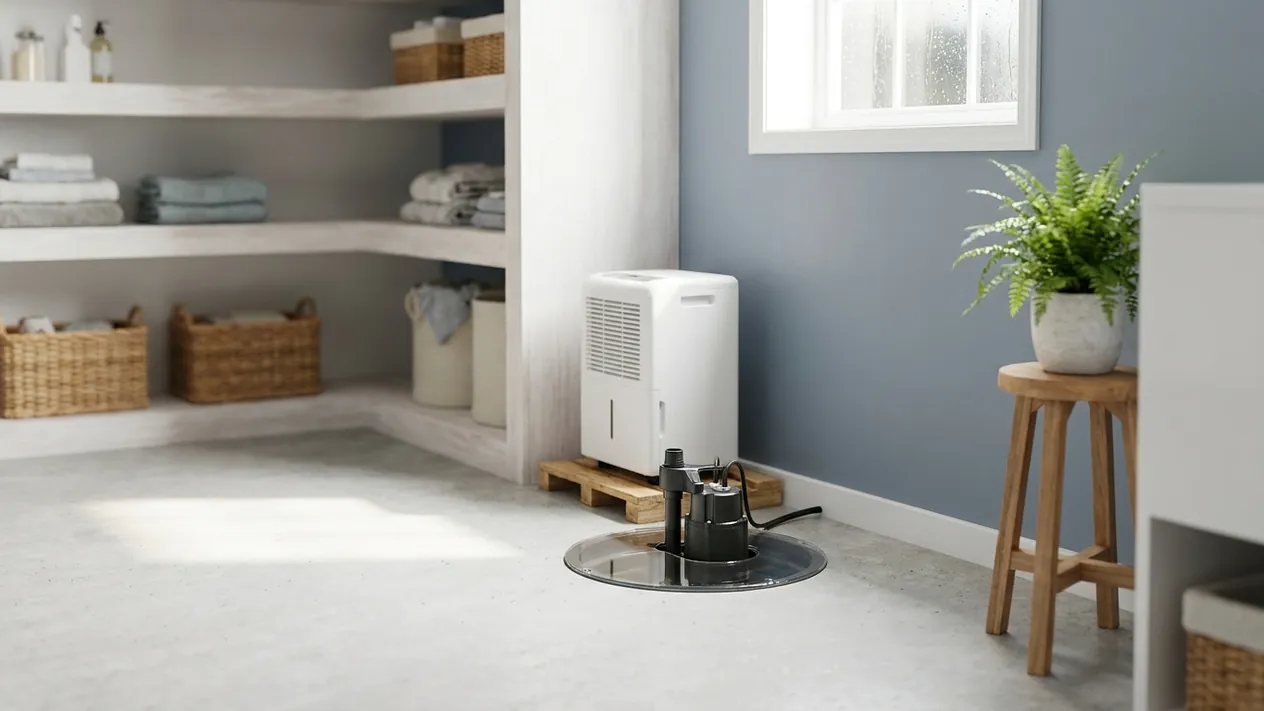
If a sump pump is installed, note whether it is running, where its discharge ends, and whether the pit is overflowing. Do not reach into the pit or unplug equipment while water creates an electrical risk. A plumber or pump specialist can test the pump, power supply, check valve, and discharge path. A failed pump may explain the water without explaining why so much water reaches the pit.
Dry and document the space after the source is controlled
EPA recommends drying flooded materials as quickly as practical, ideally within 24 to 48 hours, after the area is made safe. Remove standing water and wet items only when you can do so safely. Porous materials that cannot be thoroughly cleaned and dried may need removal. Do not turn on a flooded HVAC system to dry the basement; EPA advises addressing cleanup and equipment safety first. When electricity is safe, dehumidifiers can help, but fans should not spread visible mold before cleanup.
Keep a written record of what was removed, cleaned, dried, and repaired. Photograph damaged materials before disposal when safe, and save contractor findings. If moisture persists, a musty odor returns, or visible mold appears, ask a qualified restoration professional what remains wet. A coat of paint over damp material does not resolve the moisture source. The EPA flooded-homes resource center has more detailed cleanup guidance.
Choose the next call by the evidence
Call a plumber for a clear supply leak, drain backup, or sump issue; a gutter or drainage professional for roof runoff and downspouts; and a foundation specialist when water repeatedly enters through walls, joints, or openings. Multiple problems can coexist, so share the same photos and timeline with each person. Ask for the observed source, tests performed, proposed work, and how the repair will be checked during the next rain. Our contractor-selection guide helps compare written scopes.
Persistent flooding may also involve public drainage or floodplain conditions. Use the MSD flood information if your home is in its service area; contact the appropriate local agency elsewhere. A careful sequence (safe entry, observations, source control, drying, and a documented repair) gives you a better basis for the next decision than choosing a basement product from the first puddle.