
A burst pipe is one of the most destructive and expensive things that can happen to a home. Insurance companies see more water damage claims from frozen pipes than almost any other single cause, and the average claim runs $15,000 to $30,000 once you factor in drywall, flooring, cabinetry, and contents. The cruel irony is that preventing frozen pipes costs anywhere from $20 to $200 in materials and a few hours of your time. This is not a job to put off.
Which Pipes Are Actually at Risk?
Not every pipe in your house will freeze. Water in interior walls stays warm because the rest of your house keeps it above freezing. The danger zones are pipes exposed to outside air or unheated spaces:
- Attics: Supply lines running to upstairs bathrooms or ice makers sometimes route through uninsulated attic space. In Kentucky and Indiana winters, attics can hit well below zero.
- Crawlspaces: The most common freeze location in the region. Vented crawlspaces let in cold outside air all winter, and any supply or drain line running through them is at risk.
- Exterior walls: Pipes inside an exterior wall cavity (especially on the north side of the house) can freeze if insulation is thin or missing behind them.
- Garages: If you have a utility sink, washing machine hookup, or any plumbing in an attached or detached garage, assume it will freeze in a hard winter without protection.
- Outdoor spigots (hose bibs): The most obvious risk. The spigot itself extends through the wall to outside air, and without a shutoff and drain procedure, it will freeze solid.
Foam Pipe Insulation: The Bread and Butter Solution
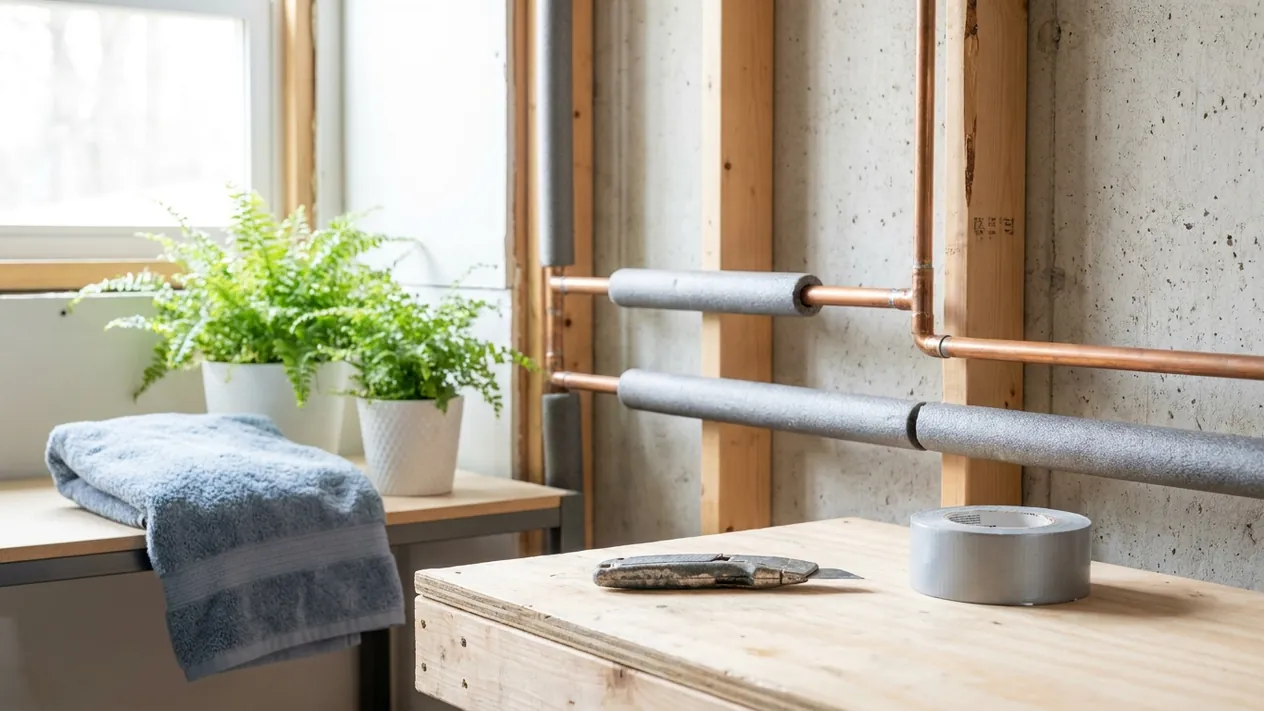
Pre-slit foam pipe insulation sleeves are the right tool for most residential freeze prevention. They're made from polyethylene or rubber foam, come in standard pipe diameter sizes (1/2", 3/4", 1"), and slip right over your pipes without any special tools.
How to Install Foam Sleeves
- Measure the pipe diameter. Most residential supply lines are 1/2" or 3/4" copper or CPVC.
- Buy sleeves that match the pipe OD (outside diameter), not the nominal size. A 1/2" copper pipe has a 5/8" OD. Most packaging accounts for this, but double-check.
- Cut sleeves to length with a utility knife or scissors. They cut cleanly and easily.
- Open the pre-slit and slip the sleeve over the pipe. It should snap closed around the pipe.
- Seal the seam with pipe insulation tape and secure end joints with zip ties or tape to prevent gaps.
- At elbows and T-fittings, cut the sleeve at 45-degree angles to fit around the bend. Tape the joints well. These are the spots where cold air sneaks in.
Foam pipe insulation costs about $0.50–$1.00 per linear foot and a typical crawlspace job runs $30–75 in materials. Budget 2–3 hours for an average crawlspace. It's uncomfortable work (you're on your hands and knees in a tight, dark space), but it's straightforward once you're down there.
Heat Cable for Extreme Cold
Heat cable (also called heat tape) is an electric resistance wire that wraps around or runs alongside a pipe and keeps it above freezing. It's the right solution for pipes in especially vulnerable locations: an outdoor wall, a section of pipe directly against a crawlspace foundation vent, or anywhere temperatures regularly drop below -10°F.
Two Types of Heat Cable
- Self-regulating cable: Automatically adjusts heat output based on the surrounding temperature: more heat when it's colder, less when it's warmer. More expensive upfront ($1.50–3.00/ft) but uses less electricity over a season and is safer (won't overheat if it overlaps itself).
- Constant-wattage cable: Outputs a fixed amount of heat regardless of temperature. Cheaper ($0.50–1.50/ft) but uses more electricity and must be installed without overlapping.
Installation
- Wrap the cable in a spiral around the pipe, or run it straight along the underside of the pipe and secure with electrical tape every 12 inches.
- Cover the cable AND pipe with foam pipe insulation to maximize efficiency.
- Plug into a standard GFCI outlet. Never use a non-GFCI outlet for heat cable. This is an electrical safety requirement, not a suggestion.
- Some cables have a built-in thermostat and only activate below 38°F. Others are always-on when plugged in.
Shutting Off Outdoor Spigots
Outdoor hose bibs should be winterized every year before the first hard freeze, regardless of whether you have frost-free models. Here's the right procedure:
- Disconnect and drain any hoses. A connected hose traps water in the spigot and can cause a frost-free spigot to freeze anyway.
- Locate the interior shutoff valve for the outdoor spigot. It's usually within a few feet of where the pipe exits the house, in a basement, crawlspace, or utility closet.
- Turn the shutoff valve clockwise to close it.
- Go back outside and open the spigot handle fully to drain any residual water from the line between the shutoff and the spigot.
- Leave the spigot handle slightly open through winter to allow pressure relief if any residual moisture freezes.
- Install an outdoor faucet cover over the spigot for an extra layer of insulation.
Dripping Faucets During a Freeze Event
When temperatures are forecast to stay below 20°F overnight (especially with wind chill), let exposed or vulnerable faucets drip slightly. Moving water is much harder to freeze than standing water. A slow drip from a hot and cold faucet adds less than a dollar to your water bill for an overnight event and can prevent a catastrophic pipe burst.
Focus the drip on faucets served by pipes in exterior walls or crawlspaces. Interior pipes in fully heated walls don't need it.
What to Do If a Pipe Freezes
If you turn on a faucet during a cold snap and nothing comes out (or just a trickle), you likely have a frozen pipe. Here's what to do:
- Find the shutoff valve for that section and know how to close it fast if the pipe has already cracked and is about to burst when it thaws.
- Open the faucet: the open faucet relieves pressure as the ice melts.
- Apply gentle heat with a hair dryer, heating pad, or space heater. Start near the faucet and work back toward the cold area. Never use an open flame. This causes house fires.
- Do NOT leave the house while a pipe is thawing. If it's cracked and you're not there when the water starts flowing, you could come home to a flood.
Tools You'll Need
- Foam pipe insulation sleeves: buy a variety of sizes to match your pipe diameters; sold in 6-foot sections
- Pipe insulation tape: seals seams and joints in foam sleeves so cold air can't penetrate
- Self-regulating heat cable: for extreme exposure points; much safer than constant-wattage in residential applications
- Outdoor faucet covers: foam-insulated covers that snap over hose bibs; about $5–8 each
- Utility knife: for cutting foam sleeves to length and fitting around elbows and fittings
- Zip ties: secure insulation at joints and keep sleeves from sliding off horizontal pipe runs
Spend a Saturday in November crawling around your crawlspace with a roll of pipe insulation and you'll sleep soundly through every cold snap the rest of the winter. The pipes most likely to freeze are the ones nobody checks until it's too late. Make sure yours aren't on that list.