
Spring A/C Maintenance: What Homeowners Can Check
Your air conditioner spent the winter sitting idle. Leaves and grass clippings may have collected around the outdoor unit, the filter may be dirty, and the condensate drain needs a check. A dirty filter can increase energy use and strain equipment, while a blocked drain can cause water damage and affect indoor humidity, according to ENERGY STAR's maintenance checklist.
Homeowner-safe maintenance focuses on the filter, visible debris around the outdoor unit, and signs that the system needs service. Arrange a pre-season HVAC visit for coil cleaning, electrical checks, refrigerant, and condensate-drain service. Do not open the outdoor unit or handle wiring to complete a spring checklist.
Step 1: Replace or Clean the Air Filter
This is the single highest-impact maintenance task you can do. A clogged filter restricts airflow, makes your system work harder, reduces cooling capacity, and can cause the evaporator coil to freeze up.
- Locate your air handler (usually in the attic, basement, utility closet, or garage).
- Note the filter size printed on the frame. Common sizes include 16x25x1, 20x25x1, and 16x20x1.
- Replace a disposable filter or clean a reusable one according to its instructions. Check the filter monthly, especially during heavy use, and replace or clean it when dirty.
- Use the filter size and type recommended for your equipment. If you want a different filtration level, ask your HVAC professional whether it suits the system's airflow.
Step 2: Clear Debris Around the Outdoor Unit
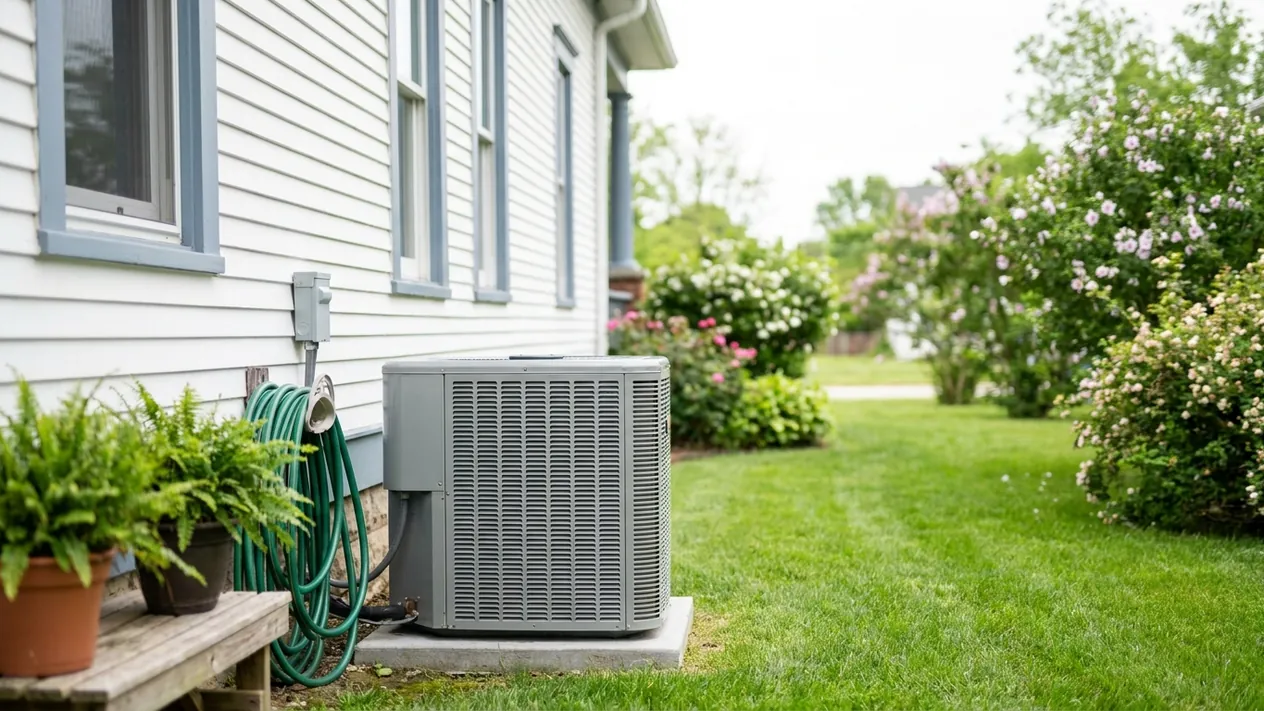
The outdoor condenser is your system's heat exchanger. It dumps the heat from inside your house to the outside air. When the fins are clogged with cottonwood seeds, grass clippings, or dust, it can't do its job efficiently, and your electric bill reflects it.
Keep this check outside the cabinet. Turn the system off at the thermostat before clearing loose leaves or grass clippings around the unit. If access to the exterior is blocked or the unit looks damaged, stop and call an HVAC technician. Do not remove panels, reach through the grille, or handle the nearby disconnect or internal wiring as part of a cleaning task.
- Clear the area: Pick up loose leaves, mulch, and grass clippings from the ground around the unit, without reaching into it. Keep vegetation from crowding the cabinet and follow the equipment maker's clearance instructions.
- Look at the exterior: Note clogged or bent fins, damaged panels, unusual noise, or signs of water around the unit. Photograph anything you want the technician to inspect.
- Book coil service when needed: Have an HVAC technician clean dirty coils, assess bent fins, and inspect the fan and electrical components. ENERGY STAR lists coil cleaning and electrical tests on its contractor maintenance checklist.
Step 3: Check the Condensate Drain Line
As your A/C cools air, it pulls moisture out of it. That moisture drips off the evaporator coil into a drain pan, then flows out through the condensate drain line (usually a PVC pipe that exits through a wall or floor). Over time, algae, mold, and slime build up inside this line and clog it.
When the drain clogs, water can back up into the pan and damage the surrounding area. Some systems have a safety switch that shuts the unit down, but you should not assume yours will stop before water escapes.
Check only the visible, accessible parts of the drain:
- Look for water around the indoor unit, a full secondary drain pan, or a visibly blocked outdoor drain outlet, without opening electrical compartments.
- If you can safely clear loose debris from an accessible outlet, do so without disconnecting the drain or pushing material back into the pipe.
- If water is backing up, the system has shut off, or the drain path is inaccessible, stop using the unit and call an HVAC technician. Ask them to inspect and clear the drain and check the pan and safety switch.
Do not pour cleaners into a drain or put treatment tablets into a pan unless the equipment maker or your HVAC professional recommends that product and method for your system.
A drain problem is one possible contributor to indoor moisture. If the home still feels damp, our high indoor humidity guide separates HVAC, plumbing, and building-moisture clues before you choose a repair.
Step 4: Inspect Refrigerant Line Insulation
The larger of the two copper pipes running from your condenser to the air handler is the suction line. It carries cold refrigerant and should be wrapped in foam insulation. Check its condition along the entire run, especially near the condenser connection and anywhere it passes through exterior walls.
If the insulation is cracked, torn, or missing sections, moisture can condense on the cold pipe and drip. Note the location and ask an HVAC professional how to repair or replace the insulation without disturbing the refrigerant line. Do not loosen or cut a refrigerant connection.
Step 5: Check Thermostat Calibration
If your system seems to run constantly or short-cycles (turns on and off rapidly), note the thermostat setting and the room temperature shown on its display. Direct sun, a nearby vent, or an exterior wall may affect the reading. If the behavior continues, ask a technician to check the thermostat and system rather than assuming calibration is the only cause.
While you're at it, if you're running an old manual or programmable thermostat, this is a great time to upgrade. See our guide on installing a smart thermostat in 30 minutes.
Startup and Electrical Warning Signs
Several faults can make an outdoor unit start poorly or stop unexpectedly. Record these symptoms and arrange a qualified inspection:
- The outdoor unit hums but the fan doesn't spin
- The system starts slowly or struggles to start on hot days
- The unit shuts off shortly after starting
These symptoms can also have other causes. Stop using a unit that struggles to start or repeatedly trips a breaker, and arrange a qualified HVAC inspection. Do not open the electrical compartment or try to test or replace a capacitor yourself. ENERGY STAR assigns electrical connection and motor checks to the contractor during a maintenance visit.
When to Call a Pro
Homeowner checks do not replace professional service. Call an HVAC technician when:
- The system isn't cooling despite clean filter and clear condenser
- You see ice forming on the refrigerant lines or evaporator coil
- You hear grinding, banging, or screeching from the outdoor unit
- You suspect a refrigerant leak (hissing sound, oily residue on lines)
- The system trips breakers or blows fuses repeatedly
Ask what a proposed tune-up includes and request findings in writing. ENERGY STAR's contractor checklist includes electrical connections, condensate drainage, coils, refrigerant charge, and airflow. Share the symptoms and safe checks you made so the technician can investigate efficiently.
If repairs are leading you to consider a replacement, use our heat-pump estimate checklist to ask about sizing, ducts, cold-weather operation, the written scope, and installation testing.
Tools You'll Need
- Replacement filter in the size and type specified for your system
- Flashlight to inspect visible areas without opening equipment
- Gloves for clearing loose leaves and debris from the ground around the outdoor unit
- Phone or notebook to record symptoms and photograph conditions for the technician
Check the filter and outdoor clearance regularly, then arrange a pre-season service visit for the internal work. A simple record of what you observed gives the technician a useful starting point and helps you notice changes later.