
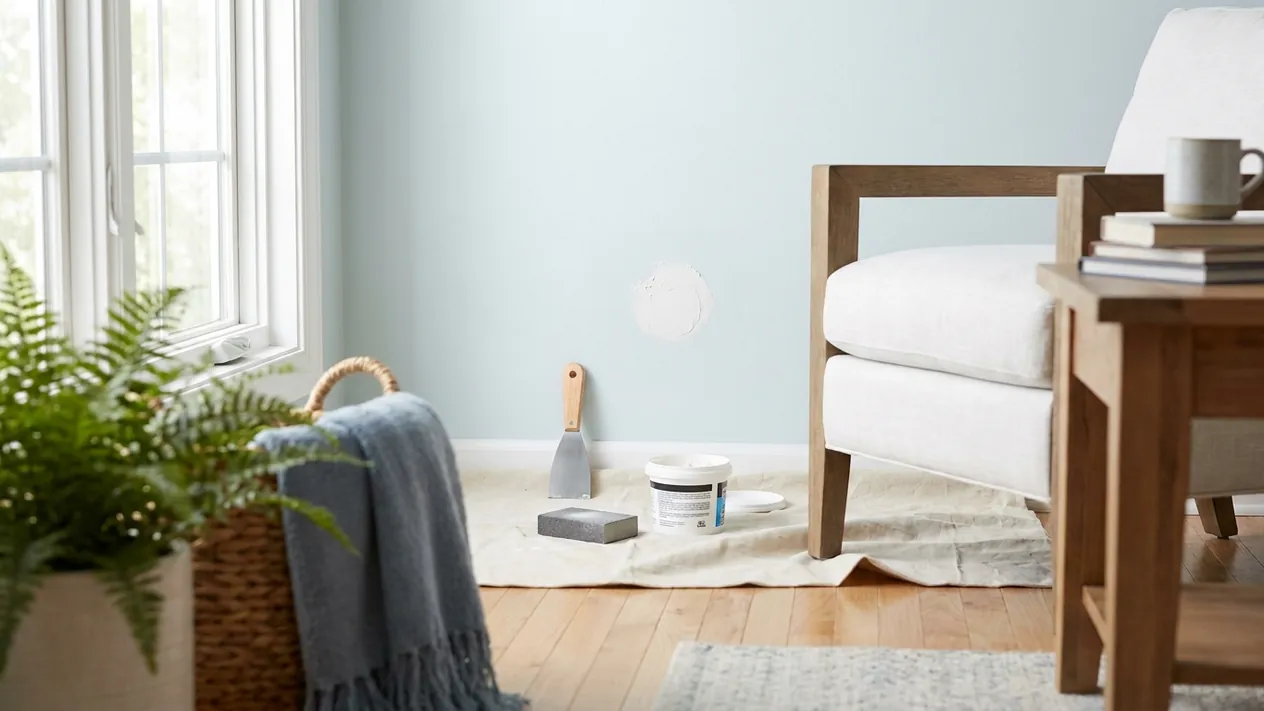
Every house in Kentuckiana takes a beating. Between the humidity swings from our brutal summers to our freeze-thaw winters, drywall cracks, dents, and holes are just part of owning a home around here. The good news is that drywall repair is one of the most satisfying DIY jobs you can tackle -- and one of the easiest to get right once you know the basics.
I spent fifteen years patching drywall in homes from Clarksville to Prospect, and I can tell you this: the difference between a visible patch and an invisible one comes down to technique, not talent. Whether you are filling a nail hole from hanging pictures or fixing the spot where the doorknob went through the wall, this guide covers every size repair you will face.
Need a hand with a bigger repair? Find a drywall pro near you on KentuckianaHomePros.
Tools and Materials You Will Need
Before you start, gather everything. Nothing kills momentum like running to Lowe's on Dixie Highway mid-project.
- For small repairs: Lightweight spackle, putty knife (2-inch), fine-grit sandpaper (220-grit), damp rag
- For medium repairs: Self-adhesive mesh patch, setting-type joint compound (not pre-mixed), 6-inch drywall knife, 120-grit sandpaper, sanding sponge
- For large repairs: Drywall scrap piece, drywall saw or utility knife, 1x3 furring strips or a California patch backing, drywall screws, mesh tape or paper tape, joint compound, 6-inch and 10-inch drywall knives, 120-grit sanding sponge, primer
- Optional but helpful: Shop light or work lamp (to spot imperfections at an angle), dust mask, drop cloth
Small Repairs: Nail Holes, Pin Holes, and Minor Dents
These are the bread and butter of drywall repair. You moved a shelf, took down a picture, or the kids bumped the wall with a toy. The damage is smaller than a quarter and the paper face of the drywall is intact.
Time estimate: 5 minutes per hole plus drying time
Step 1: Clean the Area
Use your putty knife to scrape away any loose debris or raised edges around the hole. If there is a nail or anchor still in the wall, pull it out. For plastic anchors, grab them with pliers and twist while pulling. If the anchor breaks flush, just leave it and fill over it.
Step 2: Apply Spackle
Load a small amount of lightweight spackle onto your 2-inch putty knife. Press it into the hole at a slight angle, then drag the knife flat across the surface to remove the excess. You want the spackle flush with the wall -- not mounded on top of it.
For nail holes, one pass is usually enough. For small dents where the drywall paper is crushed but not torn, you might need two thin coats.
Step 3: Sand and Touch Up
After the spackle dries completely -- usually 30 to 60 minutes for small fills -- lightly sand with 220-grit paper. Run your fingers across it. If you can feel a ridge or bump, sand more. If it feels like the surrounding wall, you are done.
Wipe the dust off with a damp rag, let it dry, then prime the spot with a dab of primer before painting. Spackle absorbs paint differently than drywall, so skipping primer means the repair will show through as a dull spot, even under two coats of paint.
Medium Repairs: Holes Up to About 6 Inches
This is where things get a little more involved. A doorknob punch-through, an elbow during furniture moving, or a spot where you pulled out a medicine cabinet -- these leave holes too big for spackle alone but too small to justify cutting in a full patch.
Time estimate: 45 minutes active work, plus overnight drying between coats
Option A: Self-Adhesive Mesh Patch (Under 4 Inches)
These kits are sold at every hardware store and they work well for clean holes under about 4 inches. The patch is a piece of aluminum mesh with adhesive backing.
- Clean any loose drywall paper or crumbling gypsum from the edges of the hole.
- Peel the backing off the mesh patch and center it over the hole, pressing it flat against the wall.
- Apply a thin coat of joint compound over the entire patch with your 6-inch knife, extending about 2 inches past the edges of the mesh in every direction.
- Let it dry completely. This takes 4 to 8 hours depending on humidity -- and around Louisville in July, that means closer to 8.
- Apply a second coat, feathering the edges out wider than the first coat. The goal is a gentle slope from the patch to the existing wall surface.
- After the second coat dries, sand lightly with a sanding sponge (120-grit), prime, and paint.
Option B: The California Patch (4 to 6 Inches)
This is my favorite technique for medium holes because it is fast and the results are excellent. You do not need to find studs or install backing boards.
- Cut a piece of drywall 2 inches larger than the hole in both directions. So for a 4-inch hole, cut a 6x6 square.
- Flip the patch over. Score the back paper and snap off the gypsum from all four edges, leaving about 1 inch of face paper intact as a flap on each side. You end up with a smaller piece of drywall surrounded by a border of paper.
- Trim the hole in the wall to match the shape of the gypsum core of your patch, so the core fits snugly into the opening.
- Spread a thin layer of joint compound around the hole on the existing wall.
- Press the patch into the hole. The paper flaps fold down over the surrounding wall, bedding into the compound. Smooth them flat with your knife.
- Apply a thin coat of compound over the entire patch, covering the paper flaps and blending into the wall. Let dry, apply a second coat feathered wider, sand, prime, paint.
The California patch is stronger than a mesh patch and blends better because the face paper is continuous. I have done hundreds of these and they disappear completely.
Large Repairs: Holes Bigger Than 6 Inches
Significant damage -- a plumber cut a big access hole, someone put a foot through the ceiling, or you are covering up an old recessed panel. For anything bigger than 6 inches, you need to cut in a proper drywall patch with backing support.
Time estimate: 1 to 2 hours active work, plus 24 hours total drying time across coats
Step 1: Square Up the Damage
Use a drywall saw or utility knife to cut the damaged area into a clean rectangle or square. Straight edges are much easier to patch than ragged ones. If you are near a stud, extend your cut to the center of that stud so you have something to screw into.
Check for wires and pipes before cutting. In older homes across Southern Indiana and the Louisville metro, you will find all kinds of creative wiring. Use a stud finder with wire detection, or at minimum, shine a flashlight into the hole and look around before sawing.
Step 2: Install Backing
If your cut does not land on studs (and usually it will not), you need to create something to attach the new drywall to. Cut two pieces of 1x3 furring strip about 4 inches longer than the height of the opening. Slide each one behind the existing drywall, one on the left side and one on the right, so about 2 inches sticks out behind the wall on each side. Drive drywall screws through the existing wall into the furring strips to hold them in place.
Now you have a solid frame to attach your patch to.
Step 3: Cut and Install the Patch
Measure the opening and cut a piece of drywall to fit. It should be snug but not forced -- leave about an eighth of an inch gap on each side. Screw it to the furring strips with drywall screws, sinking the screw heads just barely below the surface without breaking through the paper.
Step 4: Tape the Seams
Apply mesh tape or paper tape over every seam where the patch meets the existing wall. For paper tape, bed it in a thin layer of compound first. For mesh tape, press it on dry and then apply compound over it.
Apply your first coat of compound, covering all the tape and screw heads. Keep it thin. The number one mistake I see homeowners make is piling on too much compound. Three thin coats beat one thick coat every single time.
Step 5: Second and Third Coats
After the first coat dries, lightly knock down any ridges with your knife (do not sand between coats unless there are major bumps). Apply a second coat with a wider knife, feathering the edges out 4 to 6 inches beyond the first coat. Let it dry. Apply a third coat feathered even wider.
The idea is to build a gradual transition from the patch to the wall so your eye cannot catch a seam line.
Step 6: Prime and Paint
Always prime the repaired area with PVA drywall primer before painting. New compound is more porous than the painted wall around it, so without primer, the patched area will look different even with matching paint. This is called "flashing" and it is the most common reason DIY patches are visible.
For the best color match, prime the entire wall section from corner to corner, then repaint the full wall. Rolling just the patched area often leaves a visible edge where new paint meets old. If you are not confident in your painting technique or need a professional color match for a prominent wall, consider hiring a painting contractor who specializes in finish work and can ensure an invisible repair from patch to final coat.
Matching Texture
Lots of homes in our area -- especially anything built from the 1970s through the early 2000s -- have textured walls or ceilings. Orange peel, knockdown, and popcorn ceilings are everywhere from New Albany to Shelbyville. A perfectly smooth patch on a textured wall sticks out immediately.
- Orange peel: Thin your joint compound to the consistency of pancake batter. Load a paint roller with a thick nap (3/4-inch) and roll it on, then let it set up for a few minutes. Practice on cardboard first.
- Knockdown: Apply the orange peel texture, wait 5 to 10 minutes until it starts to firm up, then lightly drag a wide drywall knife across the surface to flatten the peaks. Timing is everything here.
- Spray texture: For larger areas, buy a can of spray-on wall texture from the hardware store. Again, test on cardboard. Adjust the nozzle and your distance until you match the existing pattern.
When to Call a Professional
Most drywall repairs are well within DIY range, but there are times when calling in help makes sense:
- Water damage: If the drywall got wet from a leak, you need to find and fix the source of water first. Wet drywall often means mold behind the wall, especially in our humid Ohio Valley climate. A pro can assess what needs to be torn out.
- Ceiling repairs: Working overhead is exhausting and compound falls in your face. Large ceiling patches also sag without proper technique.
- Multiple rooms or large areas: If you are repairing an entire room after a renovation, a drywall contractor will finish it faster with better results.
- Plaster walls: Older homes in downtown Louisville, Jeffersonville, and New Albany often have lath-and-plaster walls, not drywall. Plaster repair requires different materials and techniques.
Ready to get your walls looking right? Find a trusted drywall and painting pro through KentuckianaHomePros.
Quick Reference: Repair Size Cheat Sheet
| Damage Size | Method | Coats Needed | Total Time |
|---|---|---|---|
| Nail hole / pin hole | Spackle + putty knife | 1-2 | Under 1 hour |
| Under 4 inches | Self-adhesive mesh patch | 2 | 1 day (drying) |
| 4-6 inches | California patch | 2-3 | 1-2 days |
| Over 6 inches | Cut-in patch with backing | 3 | 2-3 days |
Final Thoughts
Drywall repair is one of those skills that pays for itself immediately. A handyman around the Louisville metro will charge $75 to $150 for a basic patch, and $200 or more for a large repair with texture matching. With $30 in materials and a Saturday afternoon, you can handle most of it yourself.
The key is patience. Let each coat dry fully before applying the next. Feather your edges wider than you think you need to. And always use a raking light to check your work before you pick up the paint roller.
Once you knock out your first invisible patch, you will wonder why you ever put up with those nail holes staring at you from across the room.
Have a wall repair that is bigger than a weekend project? Connect with an experienced drywall contractor in the Kentuckiana area through our directory.